

To buy crypto privately, one must first understand that most blockchains are pseudonymous, not anonymous. Your name isn’t on the transaction, but your wallet address is.
Once a link is established between your real-world identity via a bank transfer or a KYC compliant exchange and that address, your entire financial history on that chain becomes an open book. Sophisticated blockchain analytics tools now “cluster” addresses, effectively de-masking users who aren’t careful. True anonymity requires breaking the link between your identity and your digital assets at the point of entry which is especially important if your trying to play at a no KYC crypto casino.
1. Primary Methodologies for Private Acquisition
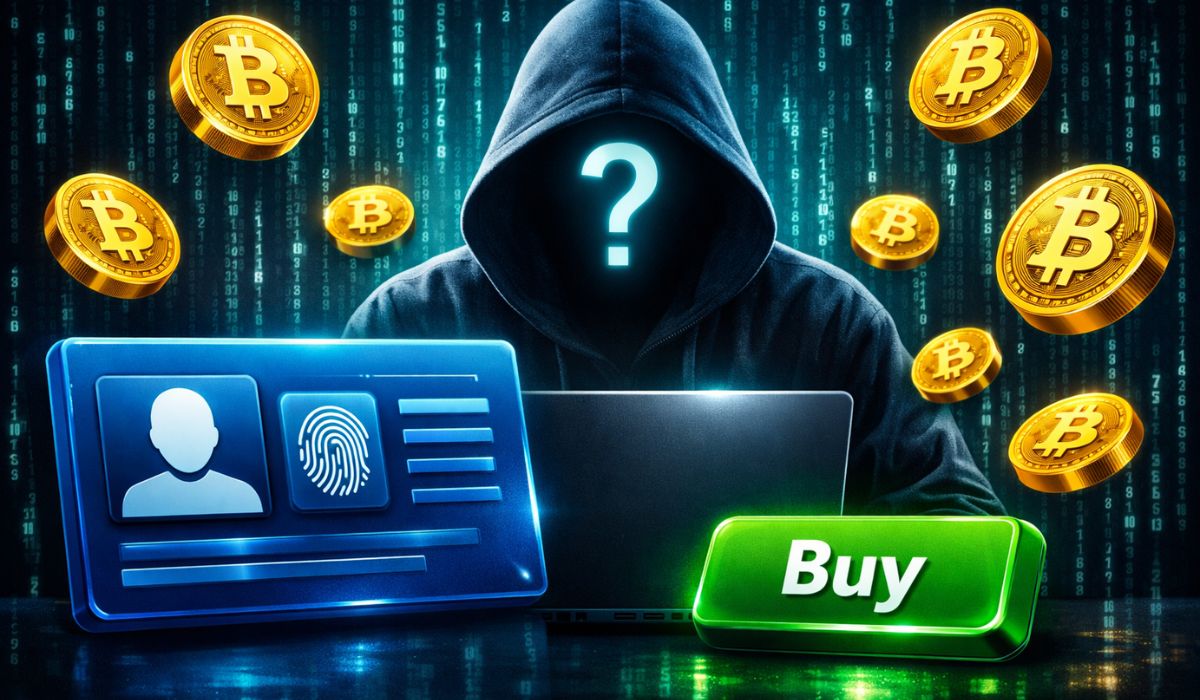
In 2026, three primary avenues remain viable for those seeking to acquire assets without triggering a “Know Your Customer” (KYC) event.
A. Decentralized P2P Marketplaces
Peer-to-peer (P2P) trading remains the gold standard for privacy. Unlike centralized P2P desks found on major exchanges, decentralized platforms do not hold user funds or require ID.
- Bisq: A desktop-based, decentralized exchange that uses Tor by default. It connects buyers and sellers directly using a security deposit system and multisig escrow to ensure trust without a middleman.
- RoboSats: An increasingly popular, lightning-fast P2P exchange that uses the Bitcoin Lightning Network. It emphasizes “robot” identities to minimize the data footprint of each trade.
- Peach Bitcoin: A mobile-first Swiss application that facilitates P2P trades with a focus on ease of use, allowing for “no KYC” Bitcoin purchases via various local payment methods.
B. Specialized “No KYC” Instant Swaps
If you already own an asset (like Monero) and wish to move into another (like Bitcoin) without an account, instant swap services provide a bridge.
- How they work: You send Asset A to a one-time address, and the service sends Asset B to your destination wallet.
- The Tools: Services like StealthEX, SimpleSwap, or the privacy-centric TradeOgre allow for swaps without accounts. However, these services monitor IP addresses; using them through the Tor browser is essential to prevent “IP-leaking” of your identity.
C. Bitcoin ATMs (BTMs) and Cash-in-Person
Physical kiosks and face-to-face exchanges represent the primary bridge between the physical world of fiat currency and the digital realm of decentralized assets, offering a tangible way to bypass traditional banking surveillance.
- The Thresholds: Most jurisdictions have lowered “no-ID” limits. To remain anonymous, you must find a machine that allows for small-batch purchases (often under $250–$500) without scanning a driver’s license.
- Vouchers: Services like Azteco allow users to buy Bitcoin vouchers at retail stores for cash, which can later be redeemed to a non-custodial wallet.
2. The Role of Privacy-Enhancing Technologies (PETs)
For many privacy advocates, the process begins and ends with Monero (XMR). Unlike Bitcoin, Monero hides the sender, receiver, and amount of every transaction by default.
The Monero Standard
In 2026, Monero remains the most resilient privacy asset. A common strategy involves:
- Buying Monero via a P2P platform.
- Moving it to a private, non-custodial wallet (e.g., Cake Wallet or Monerujo).
- Using Atomic Swaps—a trustless technology that matures in 2026—to swap Monero for Bitcoin directly on-chain, bypassing all centralized exchanges.
On-Chain Obfuscation
For those utilizing transparent networks like Bitcoin or Ethereum, privacy is achieved by employing collaborative transaction protocols and cryptographic shielding techniques that break the deterministic links between inputs and outputs on the public ledger.
- CoinJoin: Tools like Wasabi Wallet or Sparrow allow users to “mix” their coins with dozens of others, making it impossible for trackers to know which output belongs to which sender.
- ZK-Rollups: New Layer-2 solutions on Ethereum use Zero-Knowledge Proofs to allow for private transactions while maintaining the security of the main chain.
3. Essential Operational Security (OpSec)
Robust operational security is the only way to ensure that your technical efforts to remain anonymous are not undermined by leaking digital metadata. Even the most private transaction can be rendered visible if executed over an unsecured home network or linked to existing personal accounts.
- VPN & Tor: Never access a crypto service from your home IP. Use a reputable VPN or, preferably, the Tor network.
- Sub-addressing: Never reuse a wallet address. Most modern wallets generate a new address for every transaction—use this feature religiously.
- Burner Details: If a platform requires a phone number or email, use a “burner” SMS service or an encrypted email provider like ProtonMail that doesn’t link to your identity.
- Hardware Choice: For maximum security, use dedicated hardware like a Ledger or Trezor, but ensure you purchase it with cash or via an anonymous intermediary to avoid “shipping address” doxing.
4. Risks, Limitations, and Ethics
While financial anonymity is a legitimate response to the erosion of digital privacy, it carries a significant “complexity tax” and unique risks. Operating outside the KYC ecosystem requires higher vigilance, as the safety nets provided by centralized institutions are nonexistent here.
- The “Premium” Cost: Anonymous crypto usually costs 5–15% more than market rates due to the lack of liquidity and the risks taken by P2P sellers.
- Regulatory Pressure: In 2026, many “privacy-preserving” tools are under intense legal scrutiny (e.g., the EU’s MiCA framework). While holding and buying crypto privately is generally legal in democratic jurisdictions, failing to report capital gains for tax purposes is not.
- Fungibility Risks: Some centralized exchanges may flag or freeze “mixed” coins. Always move your anonymous assets into a fresh, clean wallet before attempting to interact with a regulated service.
Conclusion: The New Frontier of Financial Autonomy
As we move further into 2026, the window for anonymous acquisition is narrowing. Global regulations like the FATF “Travel Rule” are turning the crypto world into a mirror of the traditional banking system. However, for those who value the original ethos of blockchain—decentralization and individual sovereignty—the tools for privacy have never been more robust.
The goal is not to live outside the law, but to reclaim the right to transact without every purchase being aggregated into a corporate or state database. In the digital age, financial privacy is not a luxury; it is a necessary component of personal liberty.